

Unstructured and Narrative Interviews

Episode Description
In this episode of Talking about Methods, Professor Linda Mulcahy talks to Dr Kate Rossmanith about unstructured and narrative interviewing. Kate walks us through her experience of working with persons who have been entangled in the criminal justice system as offenders, victims or family members of victims. She tells us why she never asks, ‘What happened?’ and shares the single question she prepares for her unstructured interviews. She talks about the difficulty of holding somebody’s experience while not appropriating their pain, data that feels like quicksand and how to sit with complex unstructured material as a researcher.
Readings recommended by Kate Rossmanith
- Jackson, M. (2017) ‘After the Fact: The Question of Fidelity in Ethnographic Writing,’ in Anand Pandian and Stuart McLean (eds) Crumpled Paper Boat: Experiments in Ethnographic Writing, Durham, NC: Duke University Press, pp. 48-67
- Tumarkin, M (2014) ‘This Narrated Life: The Limits of Storytelling,’ Griffith Review 44, 183–92
- Wettergren, A. (2015) ‘How do we know what they feel?’ in H. Flam and J. Kleres (eds) Methods of Exploring Emotions, New York: Routledge, pp 115–24.
By the Speaker:
Rossmanith, K. (2024) ‘Imagining Closure as a Proprioceptive Problem’, Emotions: History, Culture, Society 8, pp. 297-308
Rossmanith, K., (accepted, in press) ‘Beyond Story, Voice and Narrative: Methods to understand victims’ experiences in the process of justice’, in Holder, R., Michel-Luviano, V. & Bosma, A. (eds.), Research Handbook on Victims, Rights and Justice, Edward Elgar Publishing
About the Speaker
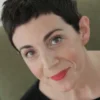
Kate Rossmanith
Kate Rossmanith is an academic and a writer. She is an Australian Research Council Future Fellow and an Associate Professor at Macquarie University, Sydney. Drawing on her background in anthropology and creative writing, she researches narrative and emotion concepts in legal settings. Her research on ‘remorse’ and ‘closure’ is influencing the work of practitioners and is improving outcomes for people caught up in the justice system. She is the author of Small Wrongs: How we really say sorry in love, life and law (nominated for literary awards) and is the co-editor of Remorse and Criminal Justice: Multi-disciplinary perspectives (Routledge, 2022).