

Legal Ethics Across Borders
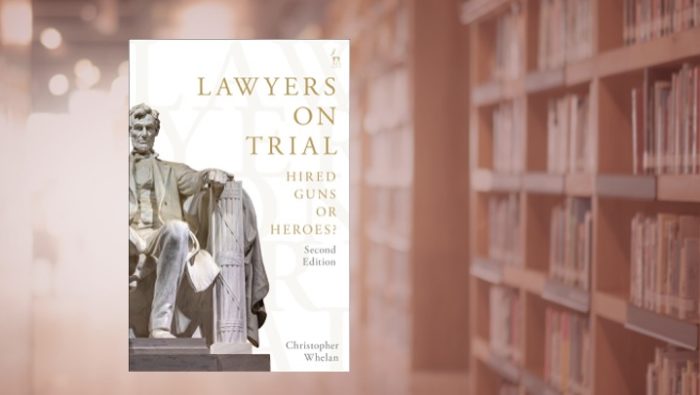
In Lawyers on Trial: Hired Guns or Heroes?, Chris Whelan rejects the simplistic theories and false binaries that feature so prominently in philosophical legal ethics. Those who see lawyers as ‘moral imperialists’ – the ‘heroes’ of the book’s title – maintain that lawyers are to be guided by their own moral compass (p. 224). On the other hand, proponents of the ‘standard conception’ of lawyering insist that lawyers set aside their personal conscience to zealously advocate for the interests of their clients, bound only by the requirements of the law (the ‘hired guns’, p. 29-32). For Whelan, this is a false dichotomy: when faced with an ethical choice, lawyers should apply their professional judgement, taking into account the requirements of the law and the circumstances of each specific case, to identify the outcome that best serves the interests of justice (p. 38-40, p. 223). This approach may not always align with the interests of the client, or their own morality, but as Whelan demonstrates, is mostly consistent with their professional codes of conduct.
Whelan interrogates an extensive array of practical examples drawn from both criminal and civil law settings in the US and UK to show how lawyers will inevitably face ‘tragic choices’ (p. 223-224), whilst at the same time maintaining an ongoing critique of both the moral imperialist and standard conception perspectives. For example, Whelan offers a nuanced assessment of the morality of ‘creative compliance’, where lawyers identify and exploit gaps, or loopholes, in legal rules (p. 104-112). Whilst moral imperialists might decry this activity as undermining the spirit of the law, Whelan counters with both practical and principled arguments, pointing out the spirit of a rule is often an elusive concept, and that it is in any event a foundational characteristic of the rule of law that a legal rule be followed regardless of its purpose (p. 109, 112). A further example is where Whelan takes issue with a core principle of the standard conception, the lawyer’s non-accountability for their client, meaning a lawyer may take on any client regardless of how morally repugnant they or their cause might be. Whelan shows how client autonomy justifications for this stance carry weight only so far as significant harm is not caused to the autonomy of others. So non-accountability may be justifiable in the criminal justice context, but less so where lawyers act for fossil fuel companies actively aggravating the climate crisis, for example (p.36).
Whelan demonstrates how formal rules of professional conduct do not always help lawyers navigate these types of ethical dilemmas. For example, whilst lawyers are bound by a duty not to disclose a client’s confidential information, there are exceptions. Some are clear, others less so. English law features a legislative override where lawyers know or suspect clients are involved in money laundering or terrorist financing (pp. 55-56). On the other hand, where solicitors in England & Wales become aware their client intends to commit suicide, they are both prohibited from disclosing that fact and at the same time justified in doing so (pp. 54-55). For Whelan, disclosure may be justified where ‘confidentiality costs’ are outweighed by ‘disclosure benefits’ (p. 50).
Whelan’s extensive examples continually highlight the importance of understanding the nuance and complexity of the lawyer’s role in practical contexts. He considers the example of the US law firm Vinson & Elkins, the much-criticised adviser to the failed energy company Enron, which Whelan presents as an especially complex and manipulative client, where the firm tended to be engaged to advise only on discrete tasks (pp. 79-81). Whilst rightly maintaining that lawyers should not turn a blind eye to their client’s actual or potential criminal conduct, Whelan emphasises how lawyers will often be understandably ignorant of all of the facts.
Whelan’s book is timely. The role of lawyers during a series of high-profile ethical scandals is rightly being closely scrutinised. At the same time, lawyers face mounting pressure to refuse to act for certain types of clients, and have been subjected to politically motivated attacks that threaten their independence. To address these challenges, lawyers need to be equipped to recognise ethical risks when they arise, and then have an adequate understanding of the applicable principles of professional conduct to respond appropriately. This is why all lawyers in practice, and not simply those who teach and study law, should read this book.
About the Author

Dr. Trevor Clark
Senior Lecturer, Dickson Poon School of Law, King’s College London
Dr Trevor Clark is a Senior Lecturer (Associate Professor) at The Dickson Poon School of Law, King’s College London. He is the articles editor of the journal Legal Ethics and the author of Financial Markets and the Ethics of Legal Practice (forthcoming, Oxford University Press).