
Negotiating Fear and Surveillance: Methodological Challenges of Fieldwork on Law in Iranian Kurdistan
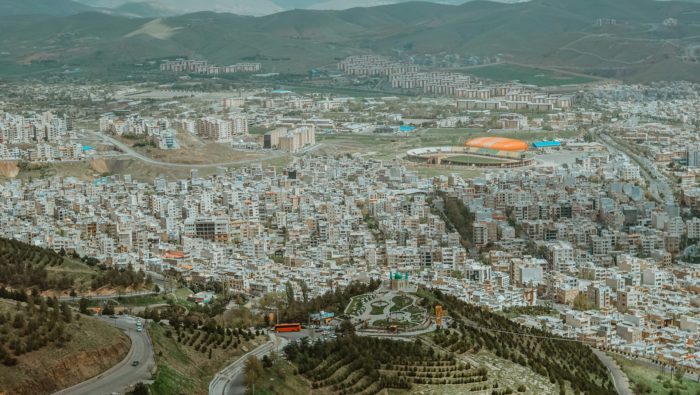
Studying personal status law in Iranian Kurdistan poses a sharp methodological dilemma: how can a doctoral researcher investigate uncodified, plural legal orders in an environment defined by fear and surveillance? My research on divorce and personal status law in Sanandaj, the provincial capital, illustrates both the vulnerability of ethnographic inquiry and the adaptive strategies required to generate Socio-Legal knowledge under authoritarian constraints.
Doctrinal blind spots and methodological nationalism
Iranian legal scholarship remains dominated by a doctrinal tradition that equates law with state law. This state-centric lens, a form of “methodological nationalism”, conceals the existence of plural legal orders. For Kurds, personal status norms are rooted in the Shafi‘i school of law (one of the four Sunni schools of law), a school never incorporated into Iran’s codified family law. This absence of codification leaves core matters such as marriage, divorce, custody, and inheritance legally indeterminate. It also creates a structural disjunction with Iranian state family law, which follows the Twelver Shia school of law and applies doctrinal methods that depart substantially from Shafi‘i jurisprudence. These disputes are not resolved by a single authority but are negotiated across overlapping forums, clerics, courts, and customary practices. Capturing this legal pluralism requires Socio-Legal methods that move beyond the doctrinal paradigm. Yet in Kurdistan, deploying such methods is fraught with political risk.
Fear and surveillance in the field
In 2021, I organised my fieldwork around courtroom observation. However, in Sanandaj—a city under the constant surveillance of the Islamic Revolutionary Guard Corps and the Ministry of Intelligence—such access proved impossible. Internal directives prohibited judges and clerks from engaging with researchers. Within weeks, I was summoned by judicial intelligence officers, accused of espionage, interrogated, and compelled to sign restrictive undertakings. These encounters underscored the fragility of research in environments where surveillance structures the very possibility of knowledge.
Methodological adaptation: from courtrooms to teahouses
Denied access to courts, I sought alternative sites. A historic teahouse in Sanandaj became an unexpected focal point for legal discourse. Community elders and retired civil servants mediated disputes informally and offered oral accounts of triple talāq practices(an instant, unilateral divorce pronounced by the husband). This peripheral ethnography highlighted the vitality of non-state legal culture, but it also attracted suspicion. Following a second interrogation, I was forced to end my fieldwork and leave Iran.
Remote ethnography as strategy
Exile closed one path but opened another. I redirected my research toward remote ethnography, analysing family court decisions, consulting online sources, and engaging diaspora networks. Through this hybrid approach, I was able to trace how Kurdish families navigate what I call “intertwined legalism”—the overlapping authority of state law, Shafi‘i jurisprudence, and customary norms. Remote ethnography cannot replicate the depth of direct fieldwork, but it provides a workable balance between researcher safety and empirical insight.
Lessons for Socio-Legal Research
Three lessons stand out. First, research in securitised contexts requires methodological agility, with designs that can adapt rapidly to new sites, methods, and scales. Second, translation—both linguistic and conceptual—is indispensable, as legal categories such as talāq or guardianship carry layered meanings across state, religious, and customary orders. Third, ethics must prioritise safety. Protecting participants and researchers in authoritarian environments sometimes requires abandoning direct access and recognising the political conditions shaping knowledge production.
Conclusion
Personal status law in Iranian Kurdistan exemplifies the limits of doctrinal approaches and the necessity of Socio-Legal methods attentive to pluralism and repression. Here, ethnography is never neutral; it is constrained by surveillance and coercion. Where direct fieldwork is not feasible, remote ethnography and methodological flexibility can sustain research while shedding light on how women and families experience law beyond the state. These methodological lessons extend well beyond Kurdistan, offering strategies for addressing the epistemic and practical challenges of researching law under authoritarian rule.
About the Author

Faraz Firouzi Mandomi
Faraz Firouzi Mandomi is a PhD candidate in law at the University of Hamburg and a practicing human rights lawyer. He holds an LLM in European Union Law from the University of Hamburg and an LLM in International Human Rights Law from Allameh Tabataba’i University in Tehran. In his PhD, he examines legal pluralism in family laws within Kurdish communities across the Middle East, focusing on how these laws are shaped through the interaction of Shafi‘i jurisprudence, customary practices, and state legal systems in Iran and Iraq.