
Utopia as a Method

Episode Description
In this episode of Talking about Methods, Professor Linda Mulcahy talks to Aislinn Fanning, Cristy Clark, Zoe Tongue and Ruth Houghton* about utopia as a method. They walk us through what utopia as a method is and how they have used it in their various research projects around feminism, legal change and social justice more broadly. They show how the method’s downsides can also be its great advantages and how freeing it can be to engage with utopian thinking.
*Nikki Godden-Rasul could not be there but is a part of the group.
Readings recommended by the speakers
- Levitas, Ruth Utopia as Method: The Imaginary Reconstitution of Society (Palgrave Macmillan, 2013).
- Davies, Margaret ‘Doing Critical-Socio-Legal Theory’ in Naomi Creutzfeldt, Marc Mason and Kirsten McConnachie (eds), Routledge Handbook of Socio-Legal Theory and Methods (Routledge, Taylor & Francis Group, 2020) 83.
- Thaler, Mathias No Other Planet: Utopian Visions for a Climate Changed World (CUP 2022)
Work by the Speakers
- Houghton R, Godden-Rasul N, O’Donoghue A, Vincenzotti S. Abolition Feminism and Utopian Justice: Speculative Visionary Fiction and the End of Gendered Violence. In: Godden-Rasul N; Kula L, ed. Research Handbook on Gender Violence and Law. Edward Elgar, 2025. In Press.
- Houghton R, O’Donoghue A. Utopia as “No-Place”: Utopias, Colonialism and International Law. Law Text Culture 2024, 27, 204-227.
- Tongue Z. L. Ectogestation as Emancipation: A Feminist Science Fiction. In: Cultural Legal Studies of Science Fiction, eds. Green, Travis, and Tranter (Routledge, 2024).
About the Speakers

Aislinn Fanning
Aislinn Fanning is a postdoctoral researcher on the European Research Council-funded project PatentsInHumans, where she works on the empirical strand of the project. In her work, she is interested in feminist and queer legal theories, empirical legal research, equality and anti-discrimination law and constitutionalism.
Cristy Clark
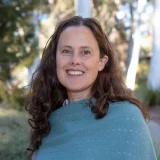
Cristy Clark is an Associate Professor at the Canberra Law School. Her research focuses on legal geography and the intersection of human rights and the environment (including water and climate justice). Her co-authored book (with John Page), The Lawful Forest: A Critical History of Property, Protest and Spatial Justice, was published by Edinburgh University Press in 2022 and won the 2023 Penny Pether Prize. Her most recent book, Legal Geographies of Water: the spaces, places and narratives of human-water relations was published by Routledge in June 2025.

Zoe Tongue
Zoe Tongue is a Lecturer in Law at the University of Leeds. Their research is primarily on reproductive rights, and she has a forthcoming monograph with Hart titled Recognising a Human Right to Abortion. She also researches representations of reproductive rights issues in utopian and dystopian feminist science fiction and is currently undertaking a research fellowship at the Library of Congress for a project on abortion in underground feminist comic books. Zoe is currently the book reviews editor for Medical Law International.

Ruth Houghton
Ruth Houghton is a Senior Lecturer at Newcastle Law School (UK). Her research is situated in global constitutionalism. She adopts feminist perspectives and utilises law and humanities methodologies to interrogate questions of constituent power and democracy within these fields of law. She co-led the AHRC Utopia and Failure network alongside Professors Davina Cooper and Mathias Thaler. With Dr Lisa Garforth, she co-leads the Newcastle University Centre on Utopian, Speculative and Pre-figurative Research (NUCUSP). Her research with Professor Aoife O’Donoghue uses literary utopias, feminist utopias and feminist manifestos to critique international law.